White water Safety Course
The White Water Safety course is designed to support paddlers on grade 2 and 3 white water rivers.
The Whitewater Safety course is a 2-day programme that consists of 9 modules and we have the possibility of running the course on the Rosanna, Lech, and various sections of the River Inn here in Tyrol, Austria.
This is a course designed by white water kayakers for white water kayakers in an moderate river situation.
Throughout the 2 days, kayakers will explore simple strategies and safe skills that can provide the tools to solve common paddling issues. All modules are interactive, practical sessions, discussing and using equipment, and exploring possible solutions to common issues on grade 2 and 3 white water rivers
The 9 modules are:
Motivations and Decisions
River Trip
Emergency planning & procedures
Review and reflections
Chase boating and equipment
Swimming and rescues
Retrieving kayakers and equipment
Scenarios
Review and reflections
We can provide the White Water Safety Course anywhere in the world not just here in Austria.
Below is some background information to the 9 modules of the White Water Safety Course.
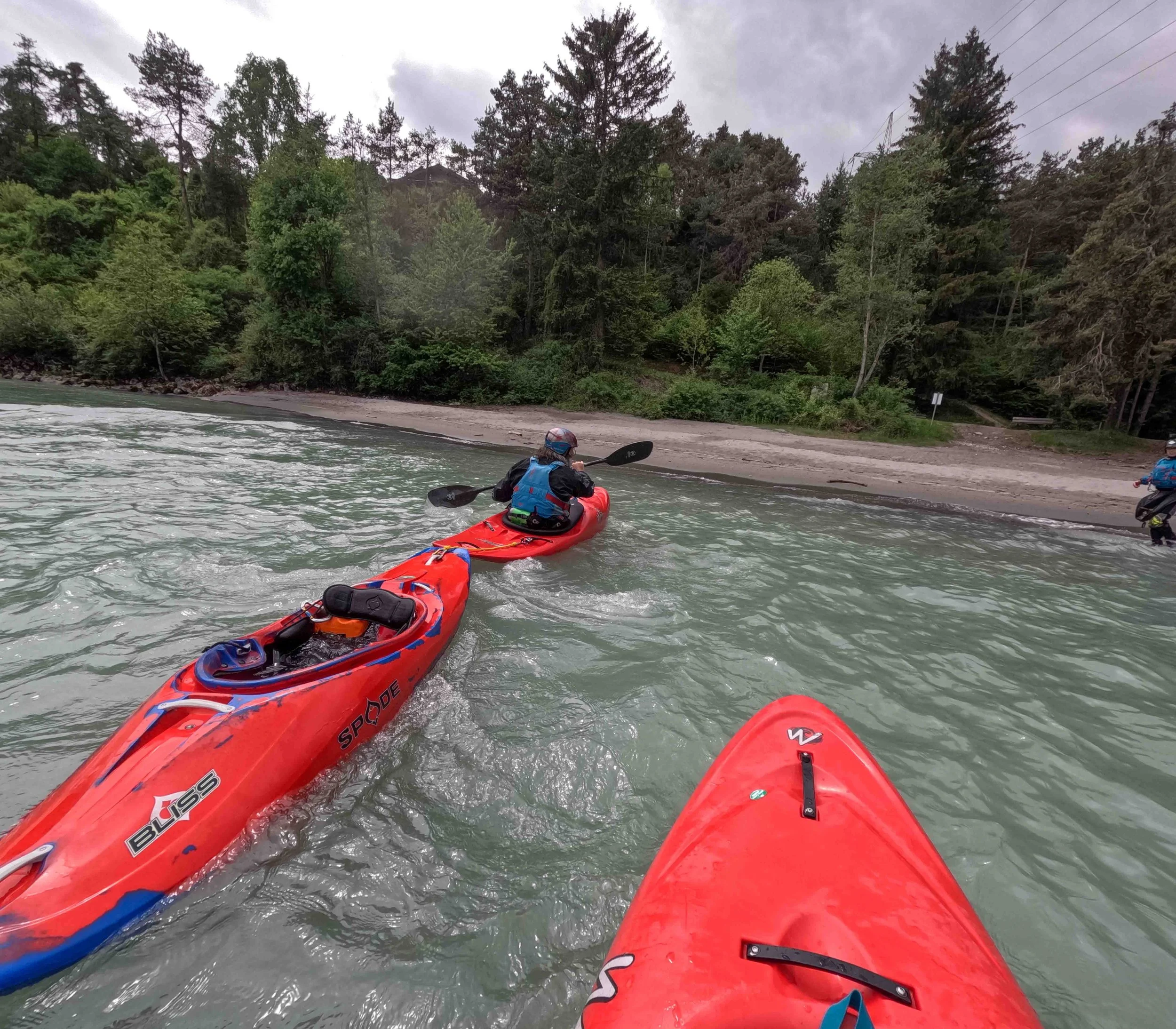
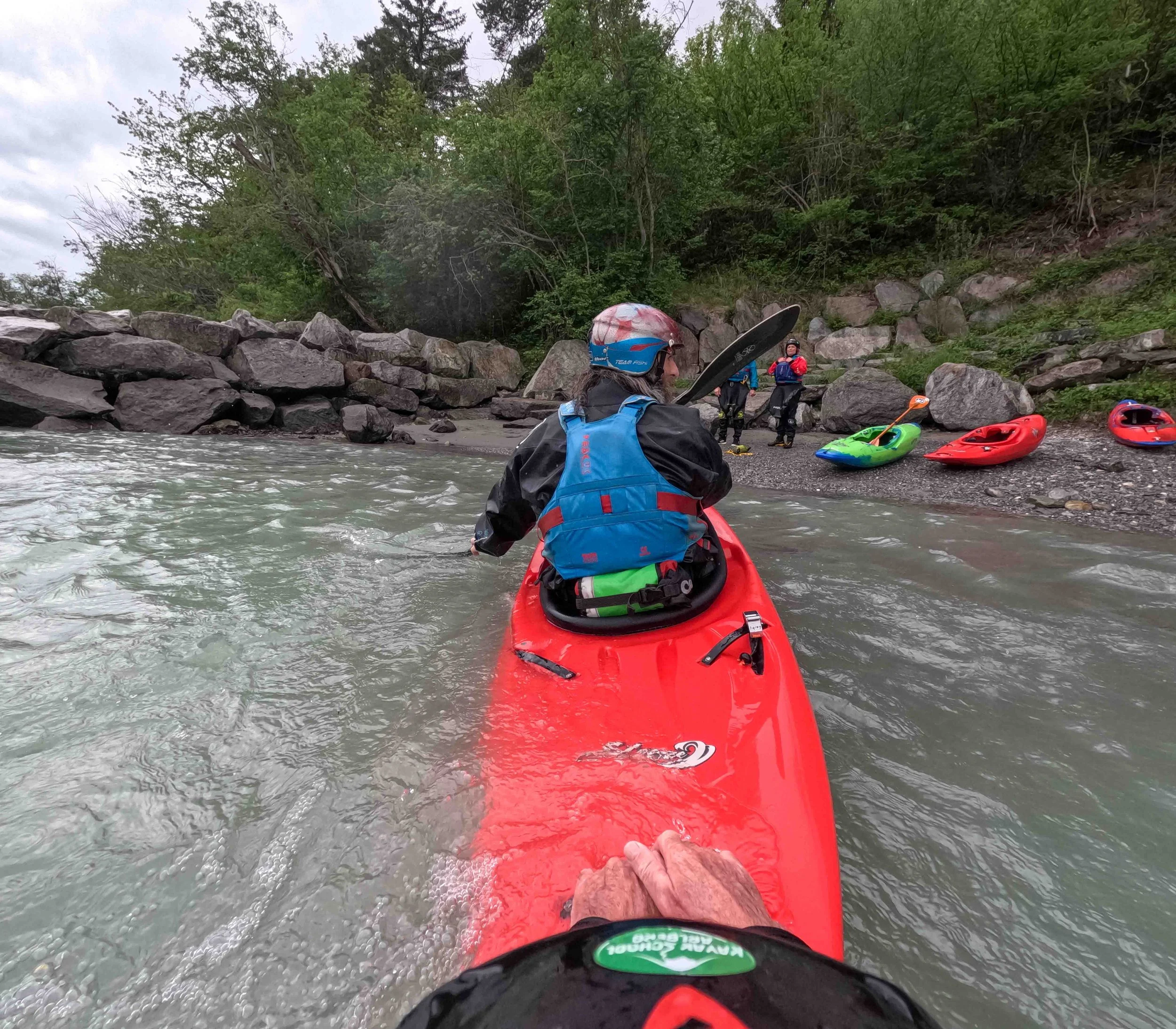
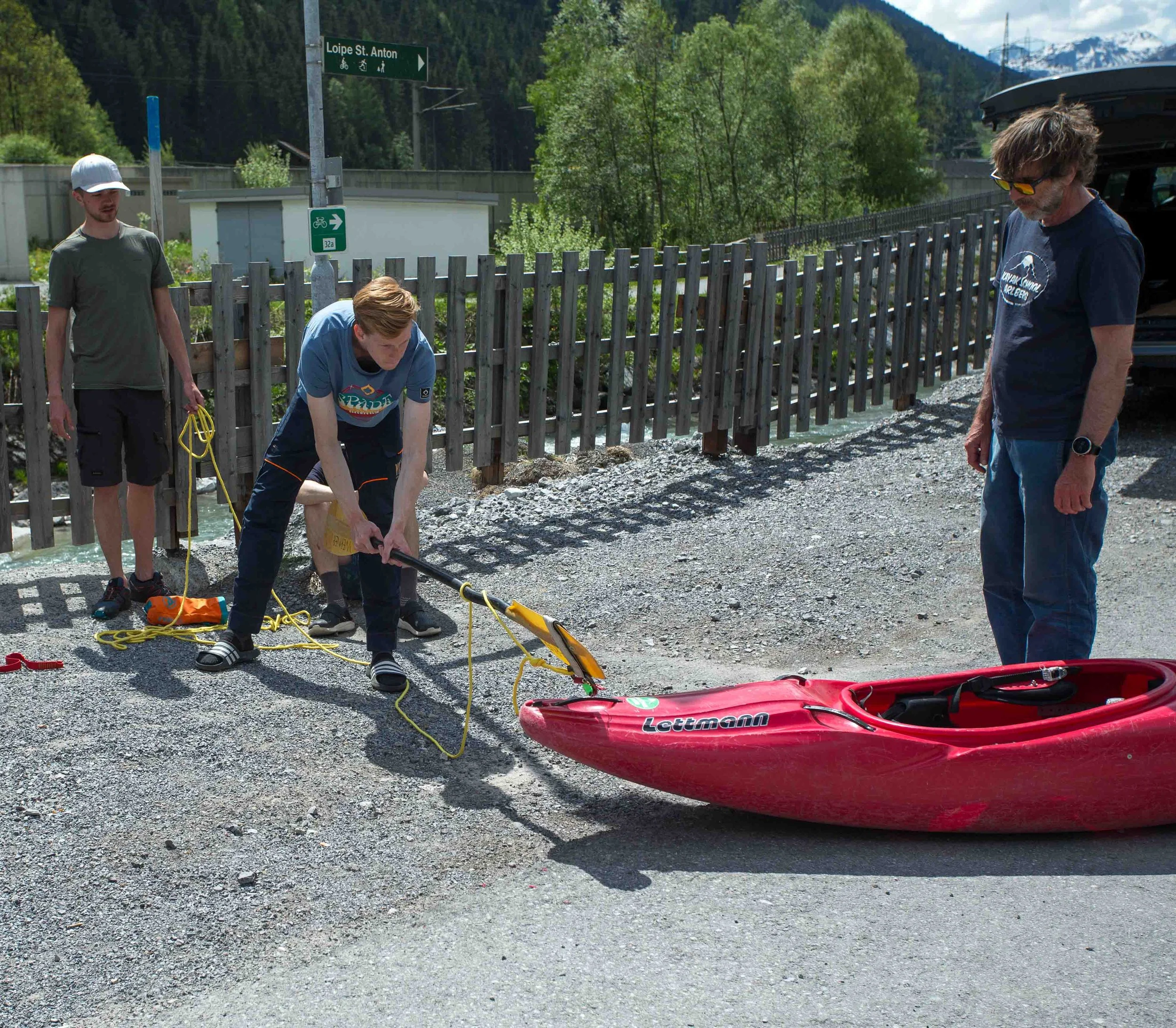
Motivations and Decisions
We delve into understanding motivations to go kayaking on a river: are you going for the adrenaline, the rapids or waves, the views or just to be in the outdoors with friends or like minded people. Of course what also comes into consideration is the selection of river or even character of river to match the group of individuals motivations and finally practical matters such as shuttles, when to get on the river, when should be getting off the river, equipment that should be carried within the group and by who!
River Trip
Here we go into subjects such as:
Pre River Checks
Working in pairs we look at each others clothing and kayak and discuss the appropriateness to the Advanced White Water Environment.
Collaborative Support
This is all about looking after each other or keeping an eye out for each other throughout the river trip. Checking in with your buddy or team to see how they are doing, are they getting tired physically or mentally, how is their body language. Are they cold or what is more important in Austria is are they taking on enough fluids in the summer heat!
Settling in
It is all about finding a routine that tells the brain it is game on! There are many different ways or approaches that kayakers go through such as splashing their face with water, rolling in the eddy at the put-in. Steve for instance, rubs water into his neoprene spray deck as a ritual when he first gets into the eddy!
River running strategies
Here we will discuss, demonstrate and practice the use of different techniques or ways to run a river or rapid. We will provide examples of river strategies that suited to each rapid or section of white water.
These can be:
All go - follow my line
Eddy hopping - only 1 kayaker in the current at a time
Buddy Buddy - working as a pair and paddling down keeping an eye on the others. Much faster than eddy hopping as there would be 2 kayakers in the current. The second pair should not overtake the first pair!
Buddy Buddy Leapfrogging - same as above but you overtake each pair.
Indian Style - No signal No go!
Equipment considerations
What equipment should we be carrying individually as well as team equipment and how it should be split within the group.
Do we require specialist equipment for certain rivers, such as steep creeking or kayaking through and deep gorge as just a few of the subjects we discuss and work on.
Emergency planning and procedures
Again we look at what emergency equipment we take on the river both individually and as a team and of course how we would use this equipment in an emergency situation.
Locating your Position
How do we locate our position on the river? Can we use old school maps or a drawn river guide or what apps are available that we can use for locating our position.
Calling for assistance
How can we call and bring in external assistance, is there a telephone signal or are we too remote or too deep inside a gorge?
What numbers do we need to know, who do we need to ring.
Also do we need to notify the authorities when we lose a kayak or paddle and who to notify!
Walking out
If you decide that to kayak further down the river is no longer an option and you are going to have to walk out. Have we planned for this at the beginning of the day, how easy is is to walk out, will we be trespassing and can vehicles get close are all questions we are going to have to answer and it makes life a lot easier and smoother if this has been pre-planned!
Casualty Management and Calling for Assistance
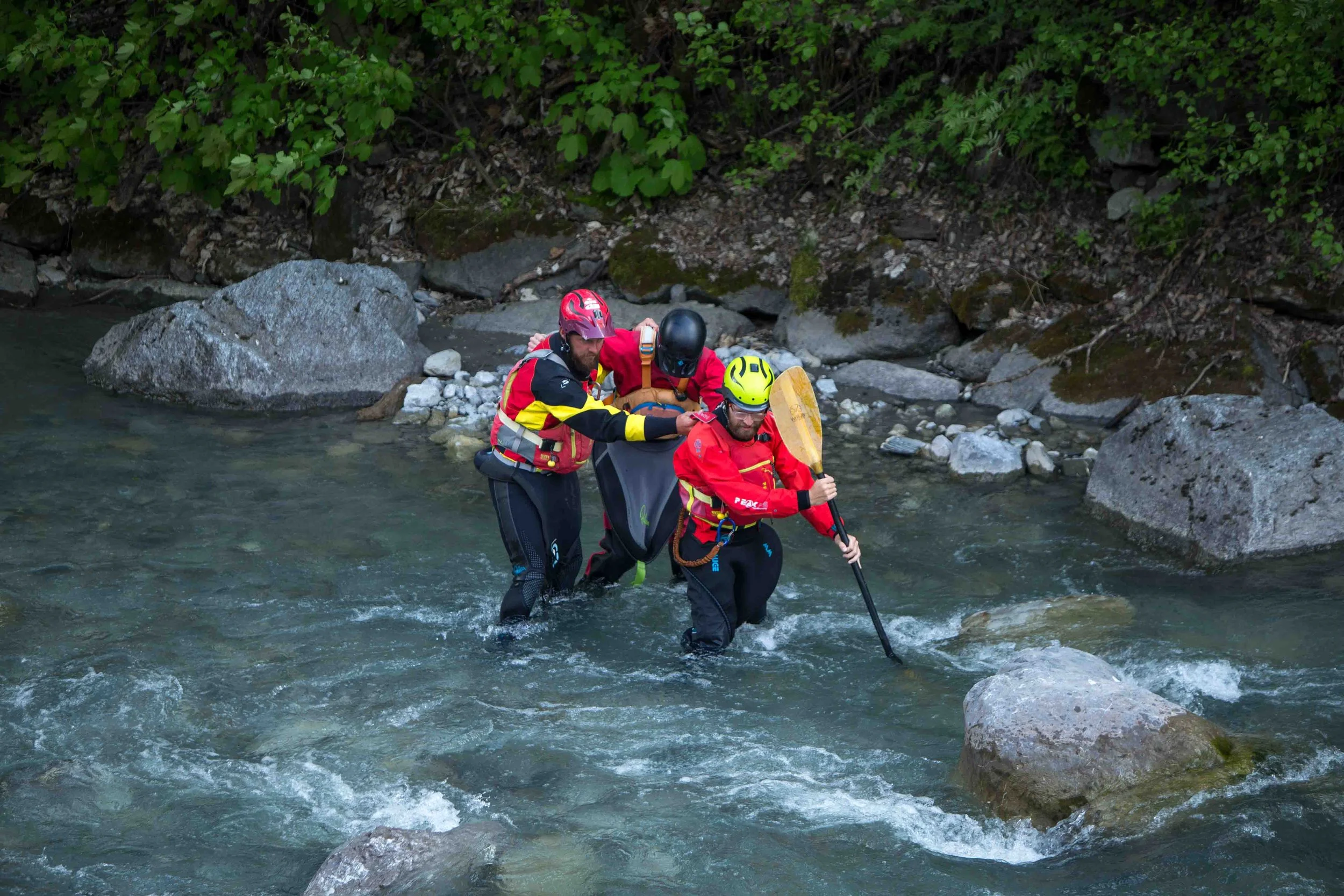
Dealing with a casualty in a white water environment will make a rescue from the authorities a little challenging and will take longer to not only reach the group but also to extract the casualty from the river.
Protecting from the Elements
Working out different ways to protect the casualty from the environment using just the equipment the team has carried on the river.
Using different approaches to protect the casualty from losing body heat and keeping the group warm and comfortable until the rescue services arrive.
Casualty Information
Using the ETHANE method we go through how to call the appropriate emergency services, their correct telephone number and understanding the emergency services capabilities and limitations.
Exact Location
Type of Incident
Hazards
Access
Number of casualties
Emergency services
Moving a Casualty
We go through a plan to extract the casualty depending on their injuries etc. Moving a casualty who has for instance a shoulder dislocating, back injury, concussion or a broken bone.
Chase boating and equipment rescues
Chase boating
Understanding when and when not to chase a kayak is critical. It is the responsibility of the individual and team members to decide whether chasing in your kayak is the correct and safest method at the time. We work and talk about the protocol of Self, Swimmer, Equipment and how that works within the confines of chasing in your kayak.
Paddle rescues
We look at different styles of paddle rescue, whether it is picking it up and holding it with your own paddle, throw and chasing or finding a way or method to carry the paddle while kayaking.
Boat rescues
How do we rescue a kayak, what equipment can we use to help us. We explore all these scenarios and go through their strengths and weaknesses while on the river and we each try different methods to see what the positives and negatives are.
Reuniting
How do we reunite kayakers with their equipment? Can we just get them to walk down and meet us or do we have to transfer equipment or a kayaker from one side of the river to the other.
Swimming and rescues
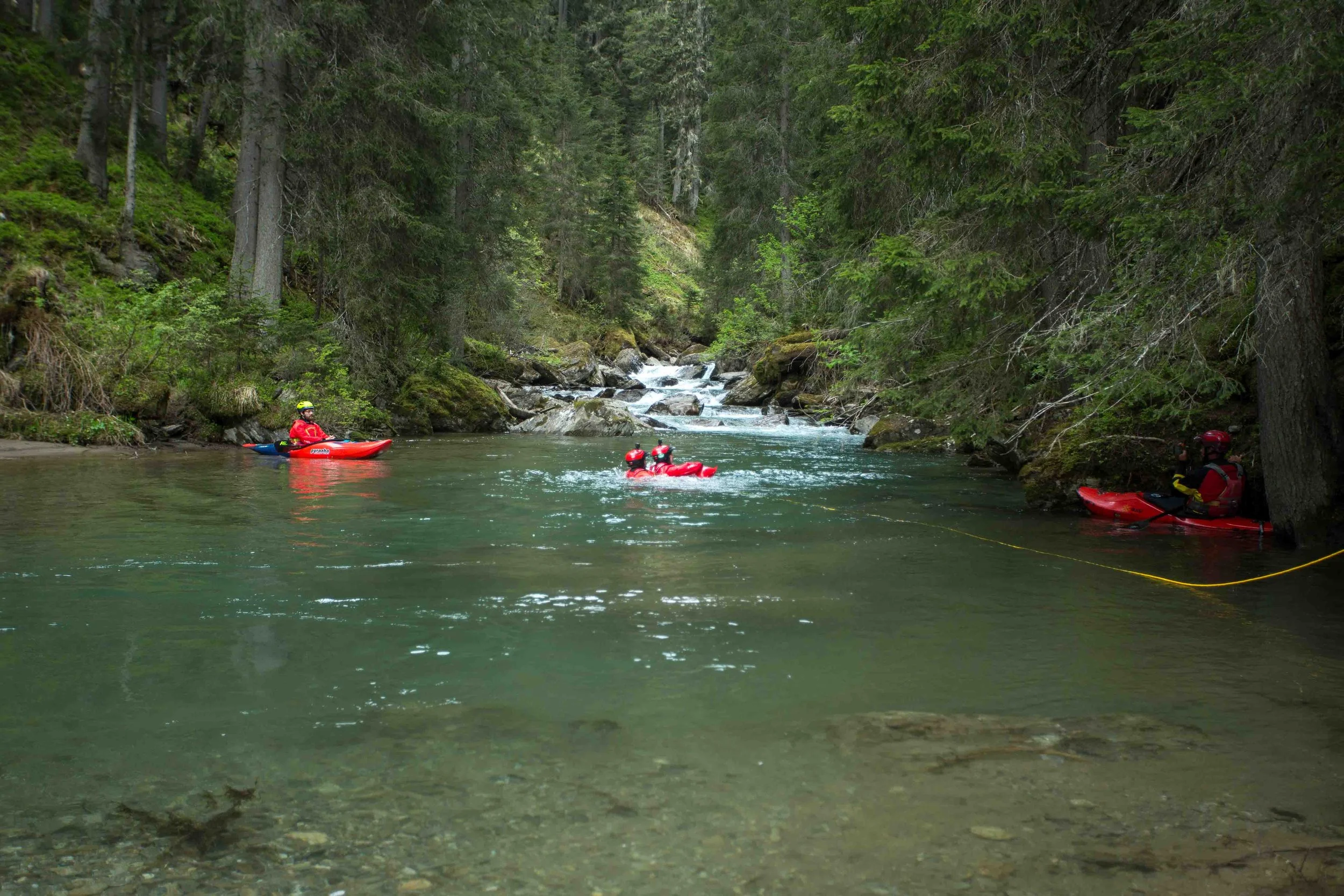
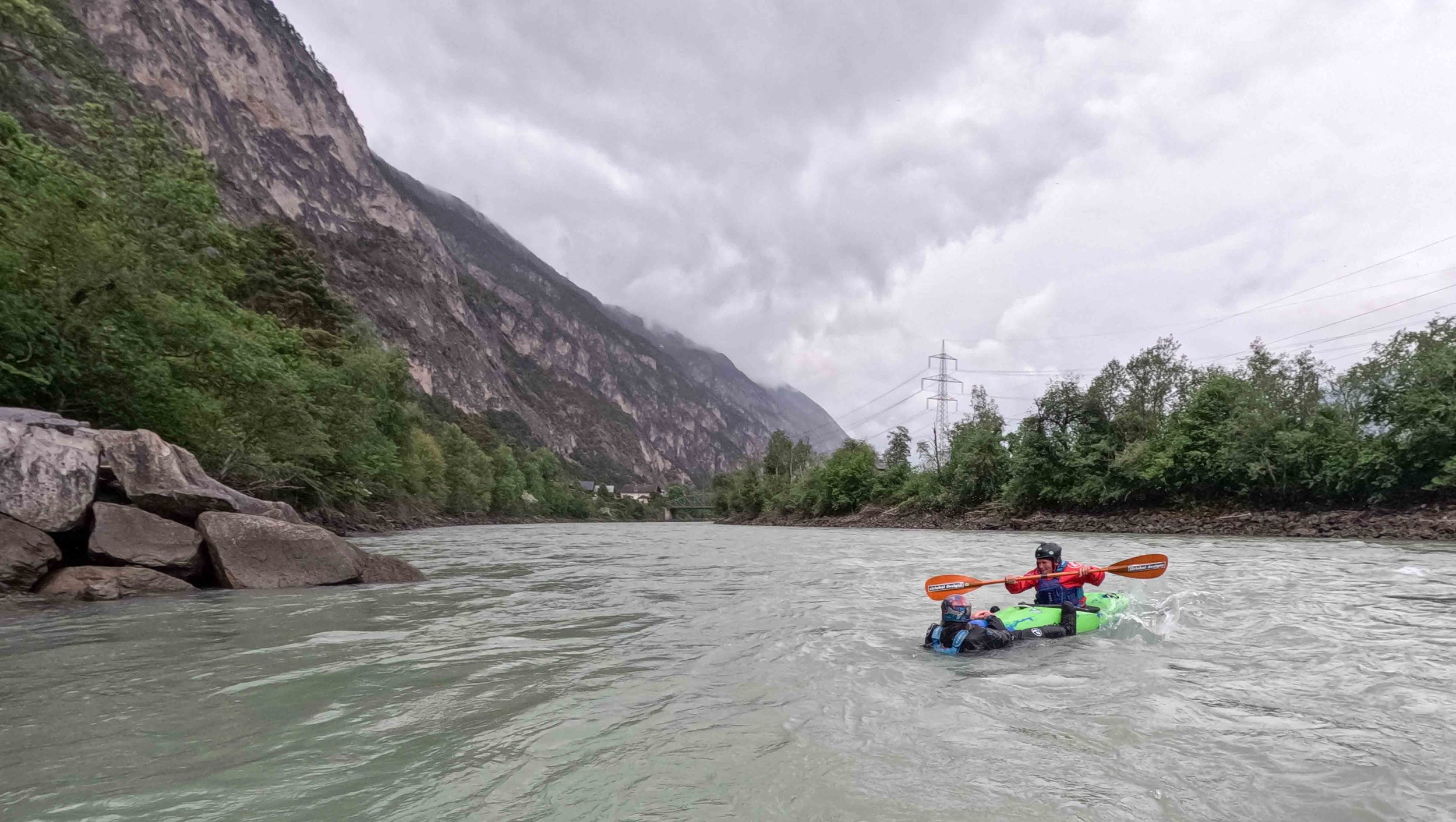
By using a mellow flow of the river we can start to work on our fundamental techniques of swimming and rescuing swimmers.
Swimming
Understanding the different techniques of swimming in white water such as L
Defensive swimming
Floating down the river with our feet downstream, hips up and chin to chest looking forward, learning how to change direction and rolling to initiate aggressive swimming.
Aggressive Swimming
Being more proactive in the white water by moving around the river more positively, laying on our stomach and actively swimming using the front crawl technique.
Rescue a swimmer from a craft
Learning to support a swimmer when you are in your kayak by loudly communicating, reminding them to swim safely (keeping the feet up and not trying to stand up on the river) and by trying to direct them to a safe area or mellow piece of white water to enable them to get out onto the river bank!
Craft based rescues
Throughout this session we will be refreshing and introducing the principles behind kayak based rescues on advanced white water. We will look at understanding rescuing in our kayaks on features such as drops, retentive holes or stoppers, longer complex rapids and also dealing with an incapacitated paddler.
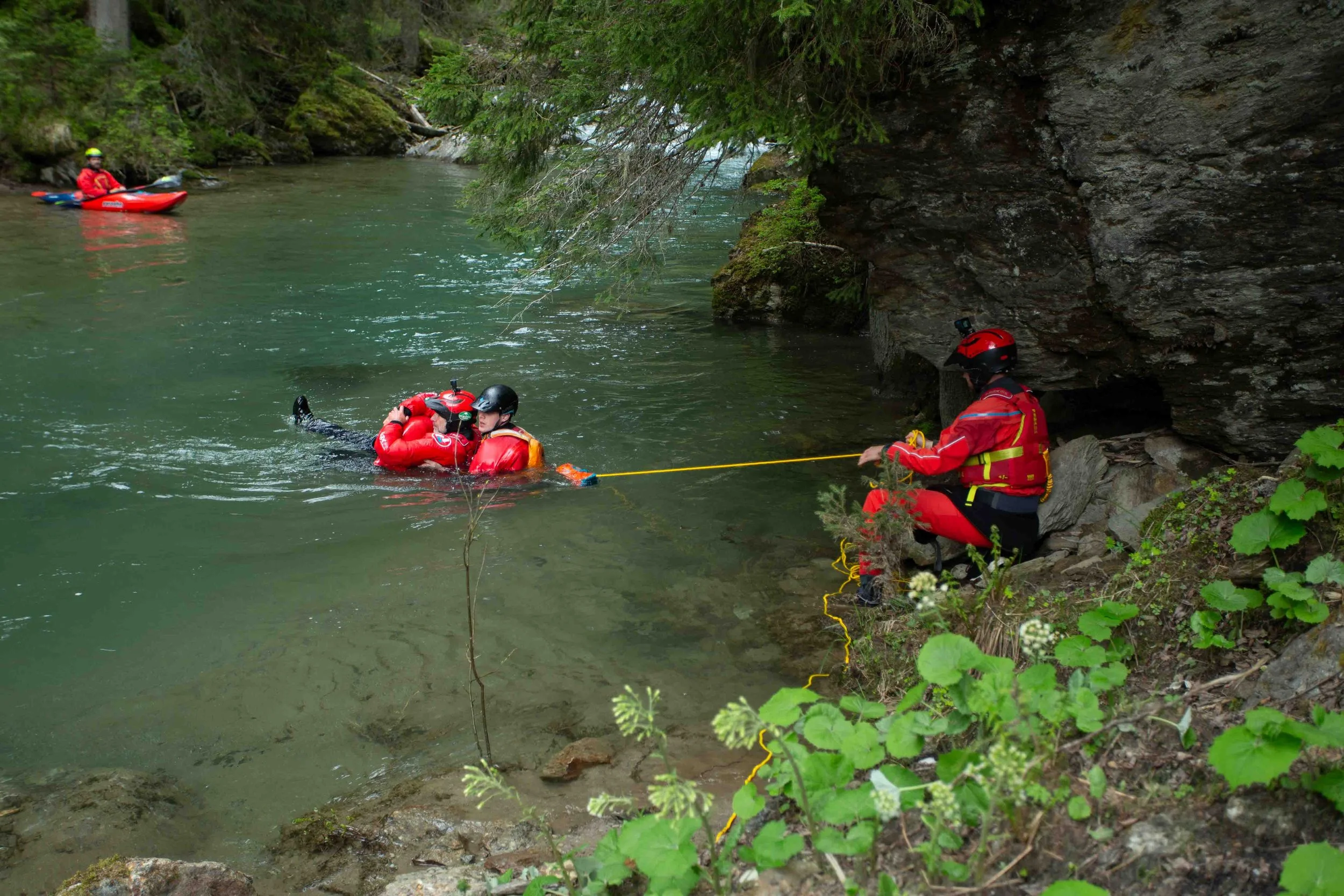
Rescue a simmer using a throw bag
An introduction and explanation of the various types and styles of throw bags and lines including colour, diameter and length.
We will explain the importance of the Clean Rope principle.
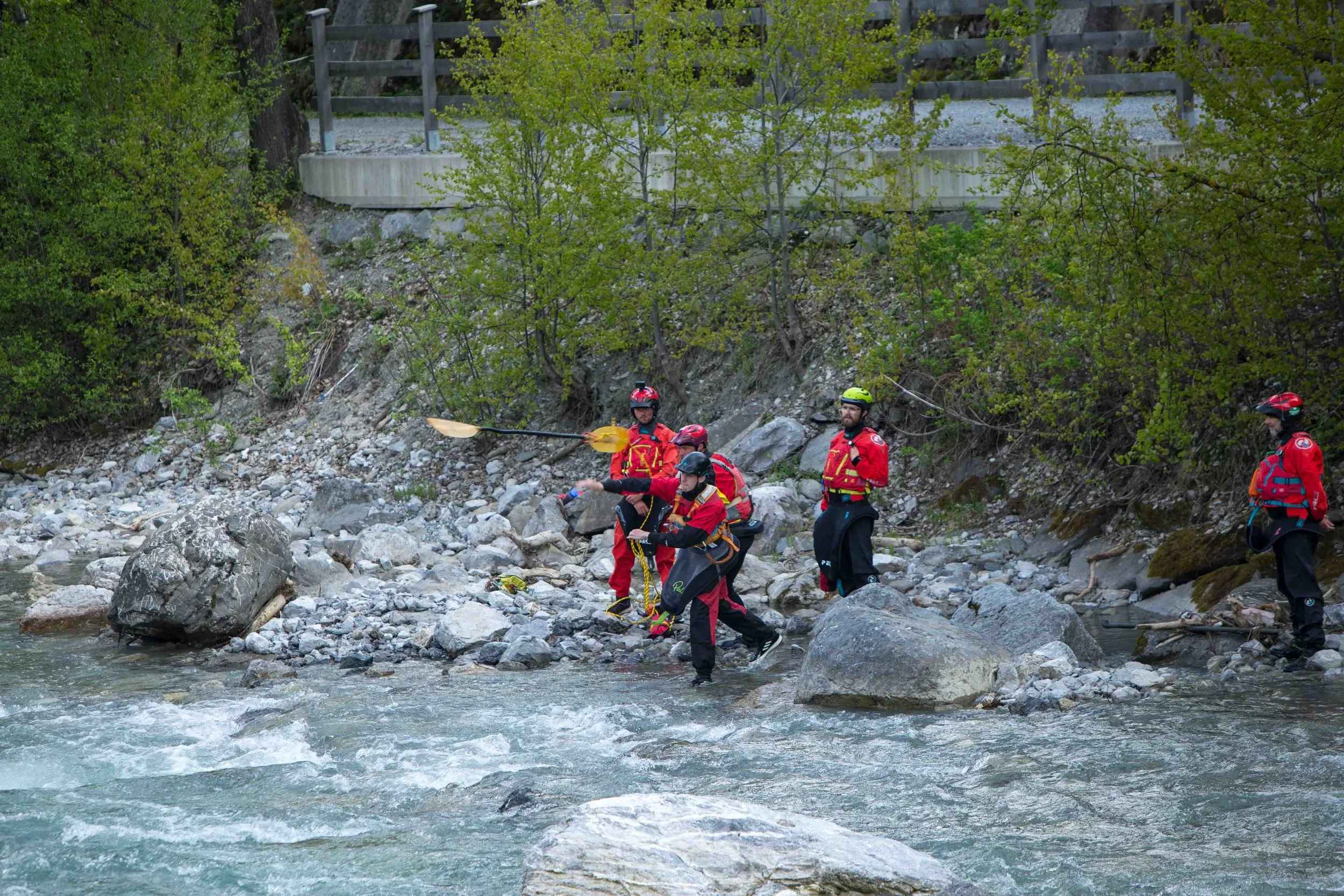
Demonstrations of various throwing techniques, their uses and their drawbacks.
A lot of group practice both swimming and being rescued by a throw bag from various river bank heights, under trees or shrubs etc
Finally having a buddy to belay or offer additional stability and support when using a rescue rope in an advanced environment.
Rescue a swimmer from a stopper
By progressing the session from a flowing environment to one where a swimmer is stuck in a stopper or hole we can now focus on extracting the swimmer safely out of the hole and onto the river bank.
We look at the concept of reaching the swimmer stuck in the hole with a throw line, how we can add flotation to aid the rescue and just how to do we go at extracting a swimmer from a hole or stopper.
Retrieving kayakers and kayaks
Talking through the typical environments that kayakers and kayaks could get stuck on a Class 2 or Class 3 river including stuck in trees, foot entrapment, stuck on a rock or in a stopper.
Paddling Out
Understanding how to paddle out to rescue a kayaker or a piece of equipment with an emphasis on rick, approach and an extraction plan
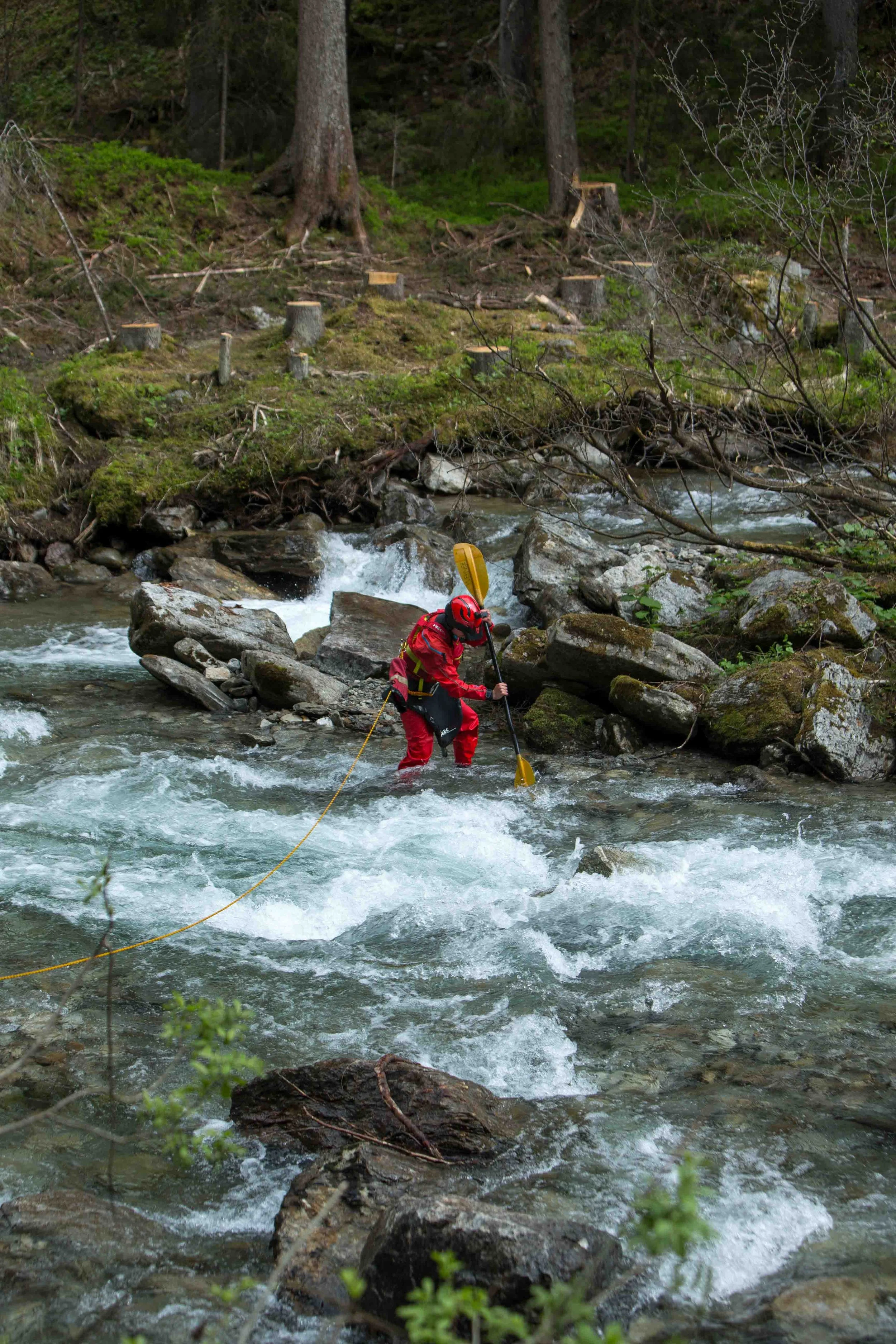
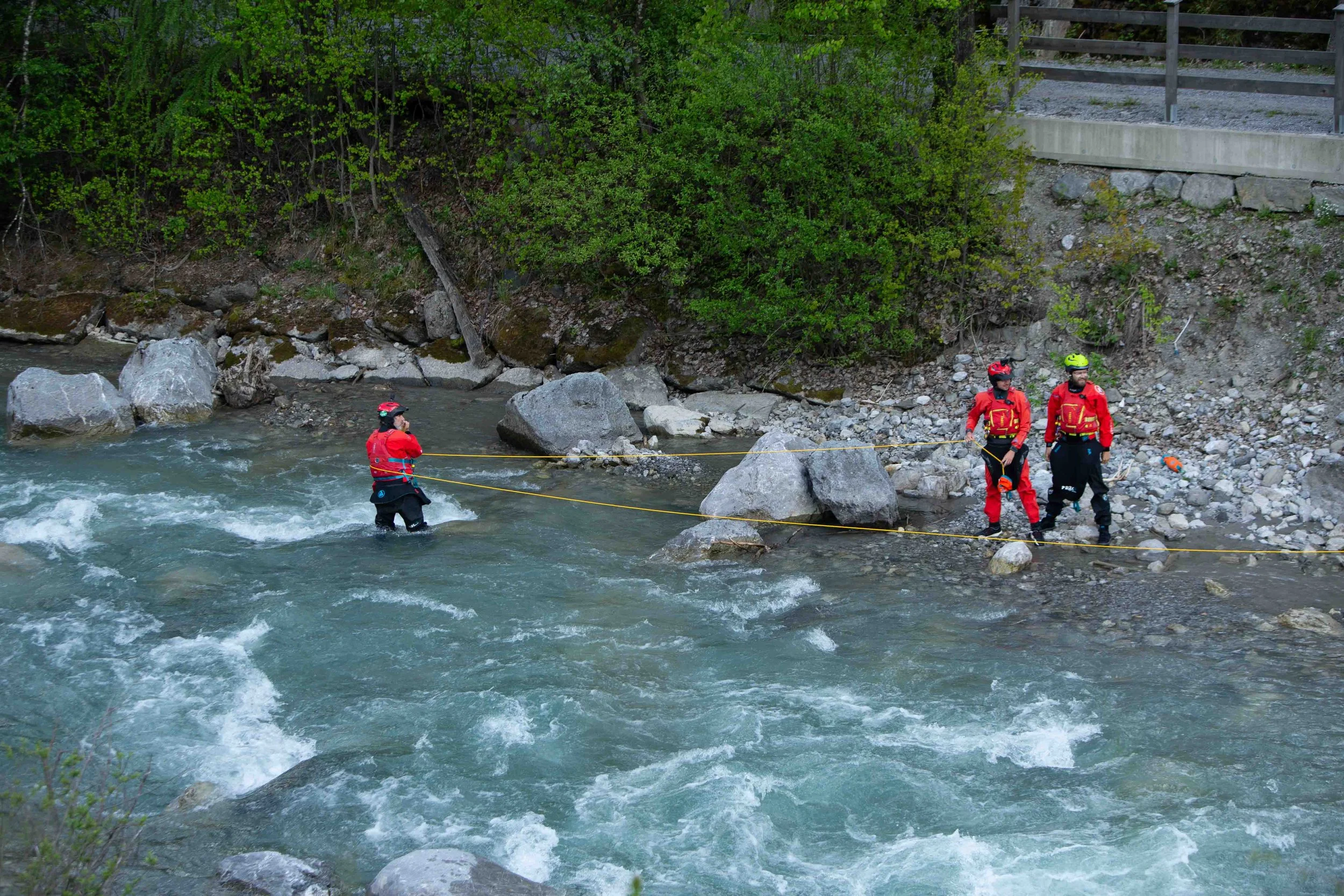
Wading
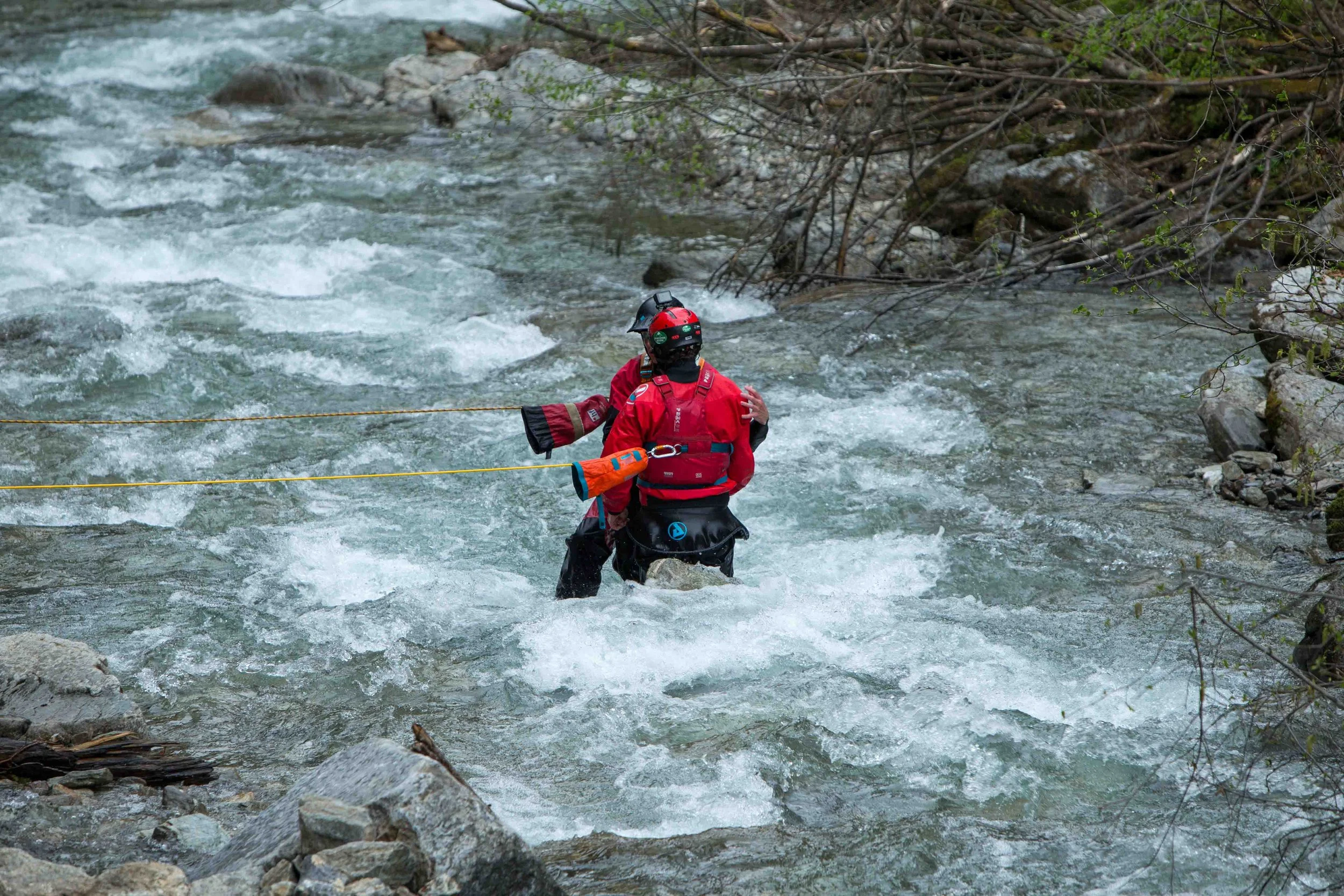
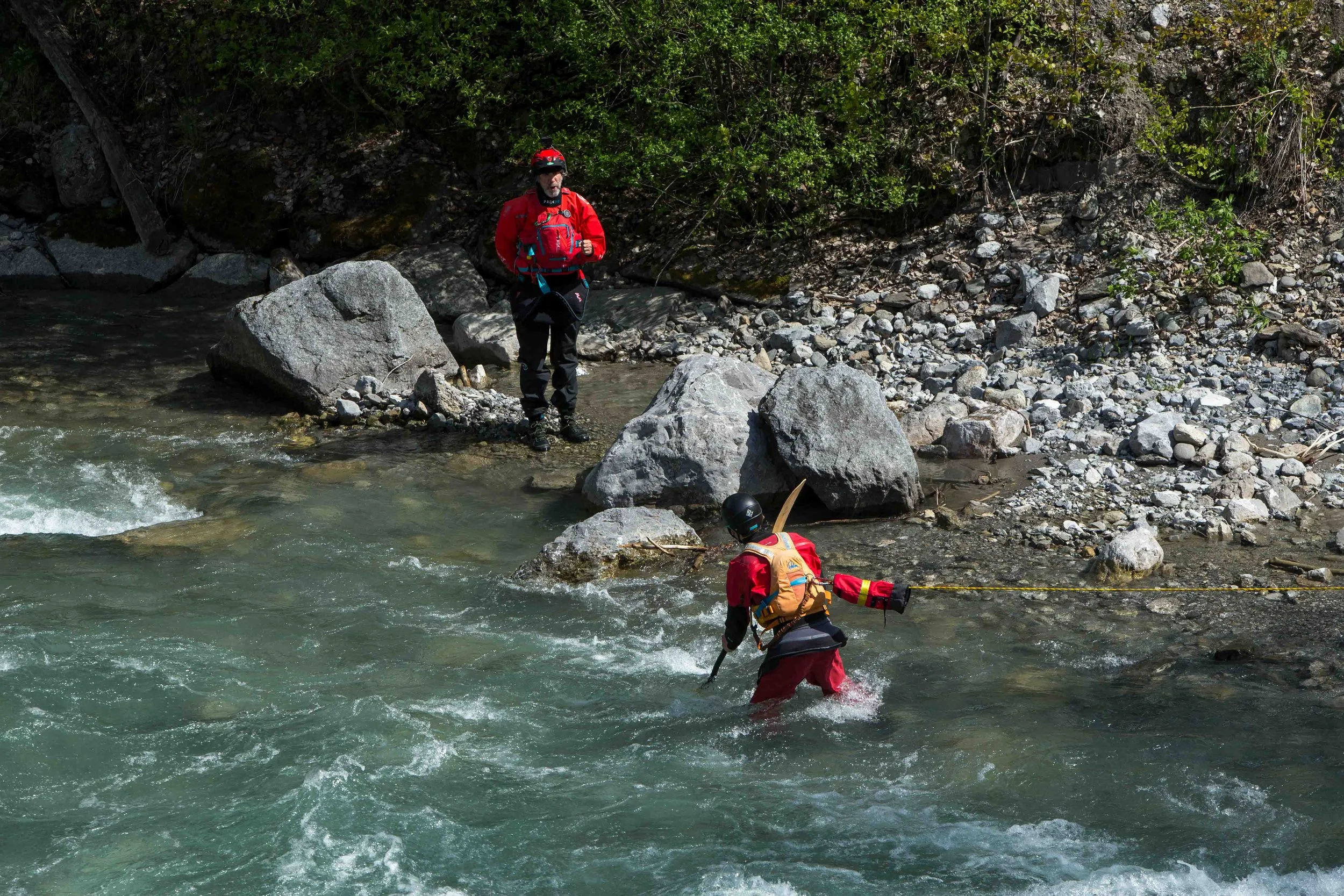
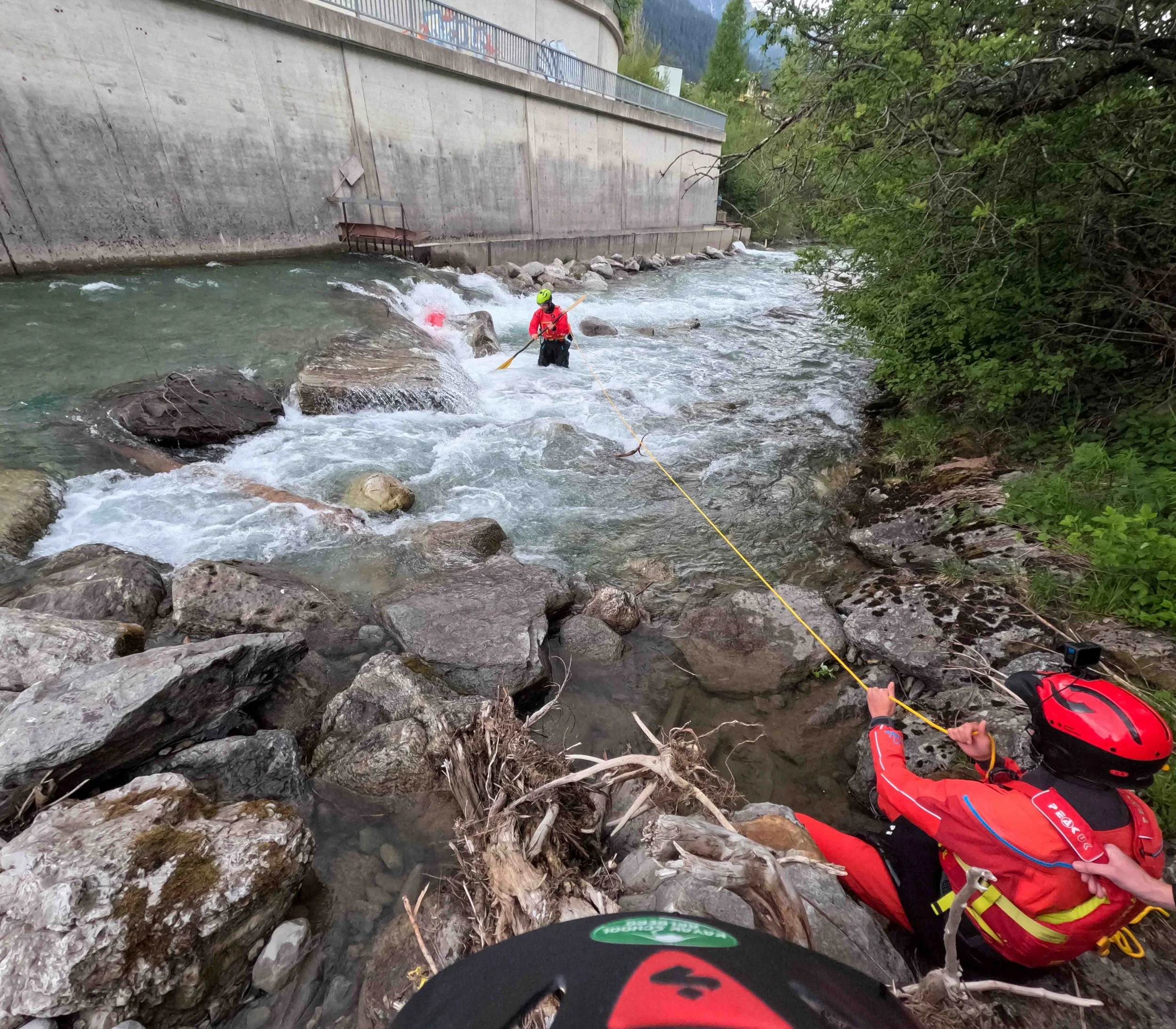
Understanding the importance of the appropriate depth for wading and its dependence on speed of water and river bed conditions. Working on different techniques to wade into the river such as using a paddle, attaching a rope.
Quick release buoyancy aid harness
Understanding and comparing the different harness designs that are on our pfd’s or buoyancy aids, looking at the positives and negatives.
Explaining the role and use of the metal buckle behind the release toggle and making sure the harness is of the correct length.
Looking into attachment points for chest harnesses and the possible ways in which this can be carried out incorrectly such as attaching a non locking carabiner to a harness.
Support from the bank
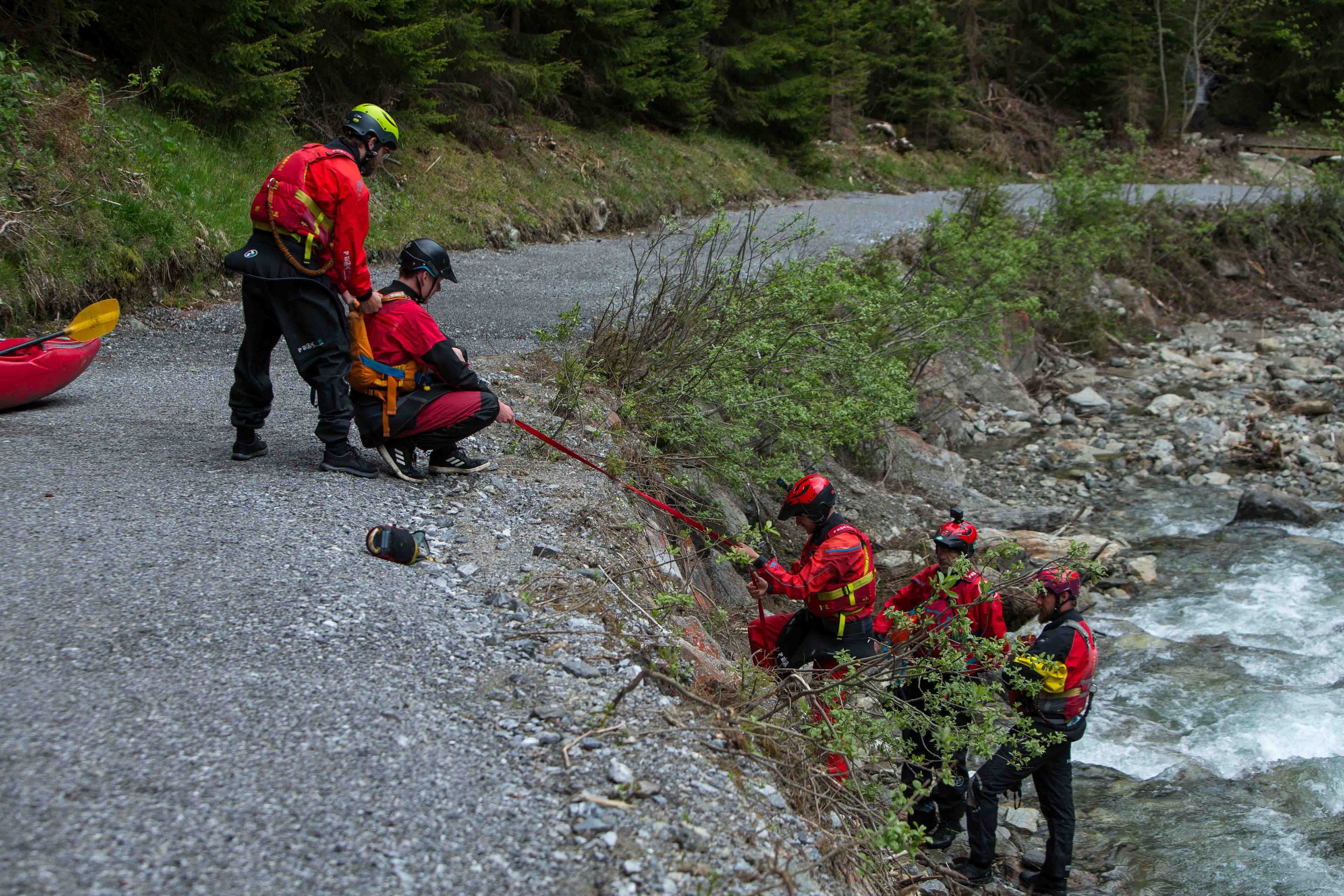
Working on a plan and methods that can be adopted to different scenarios and the forces applied to supporting a swimmer or someone that is wading into the main current. Checking the system before anyone enters the river so that it is as safe as possibly can be.
Extraction Methods
Stuck Kayaks
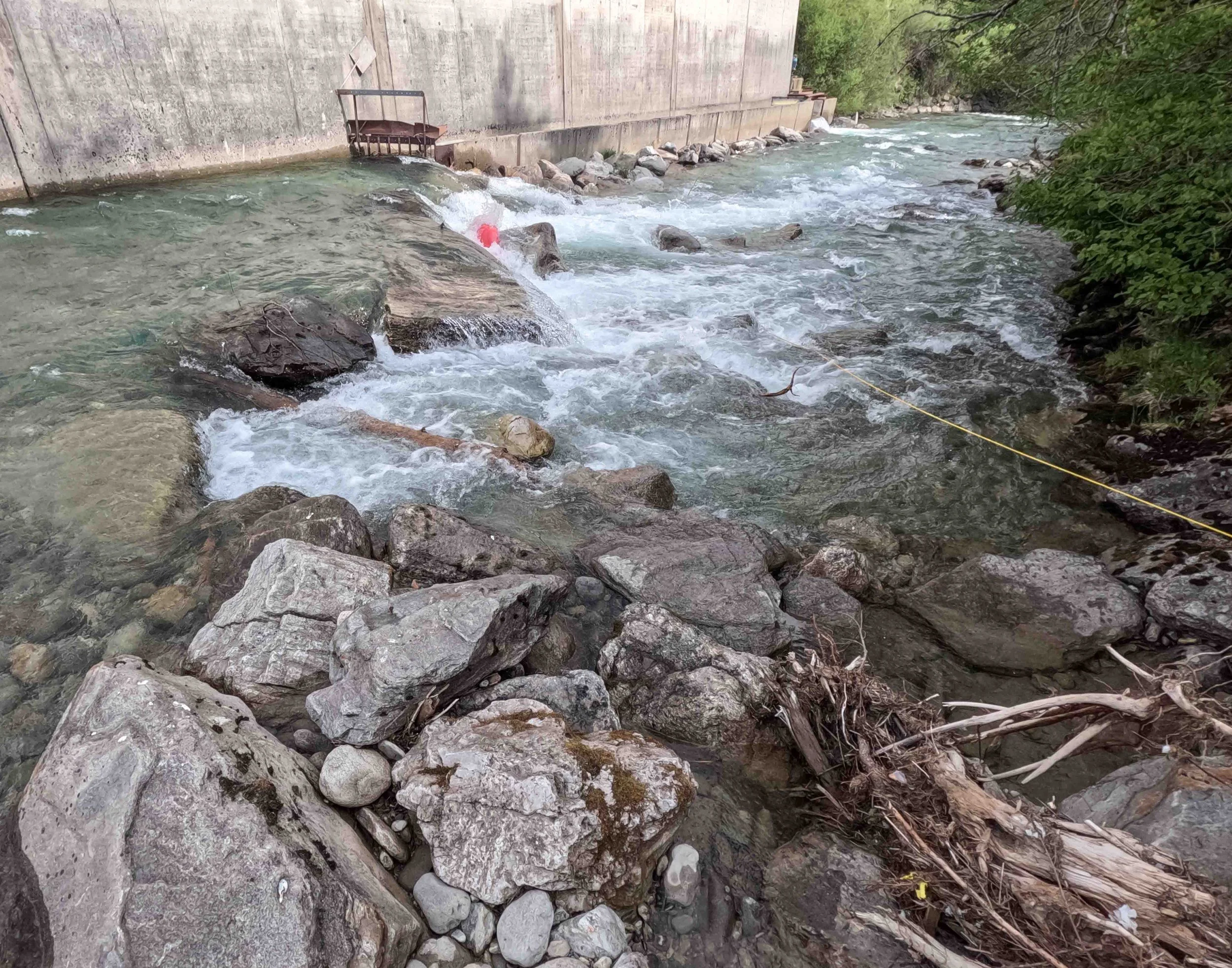
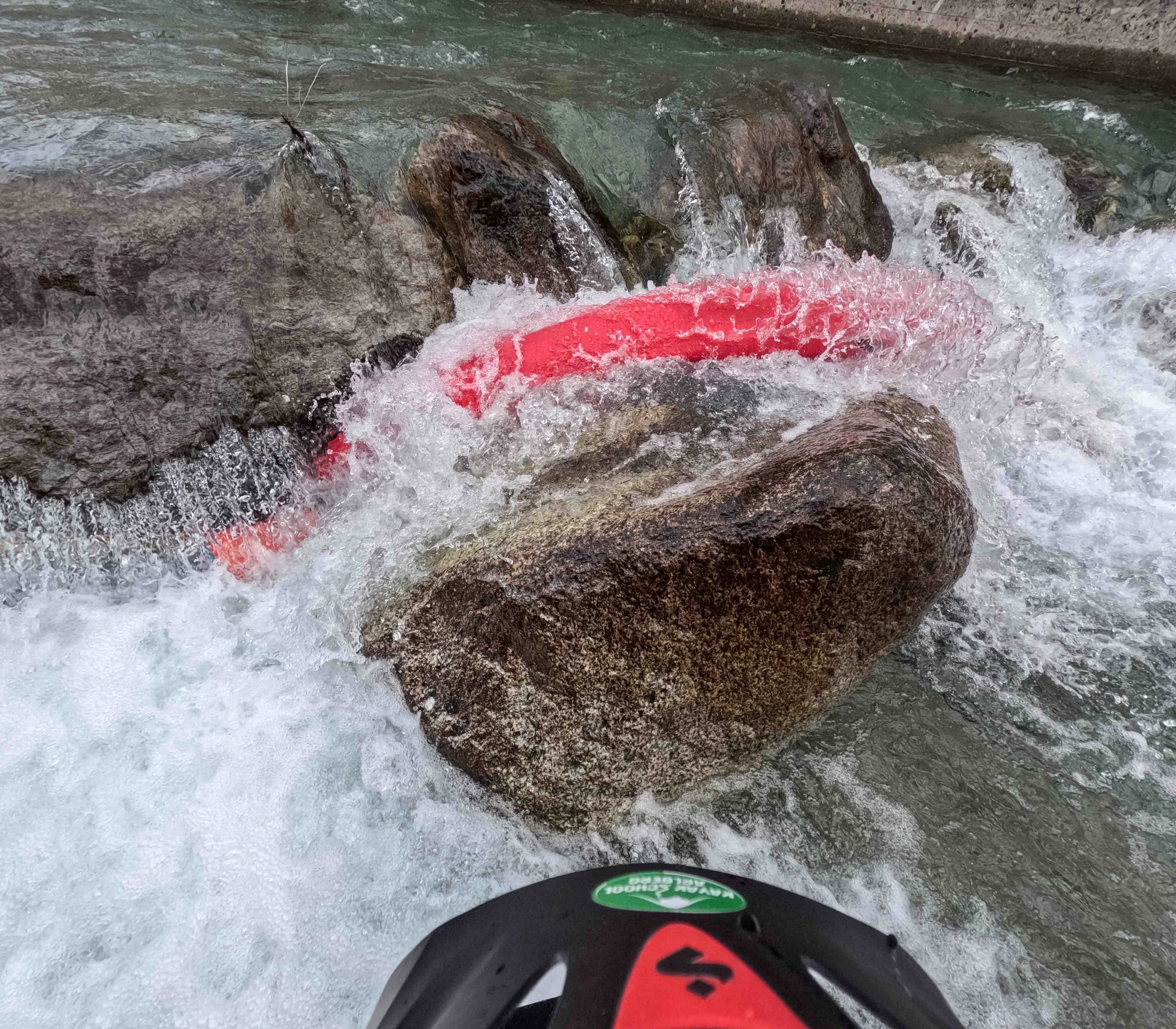
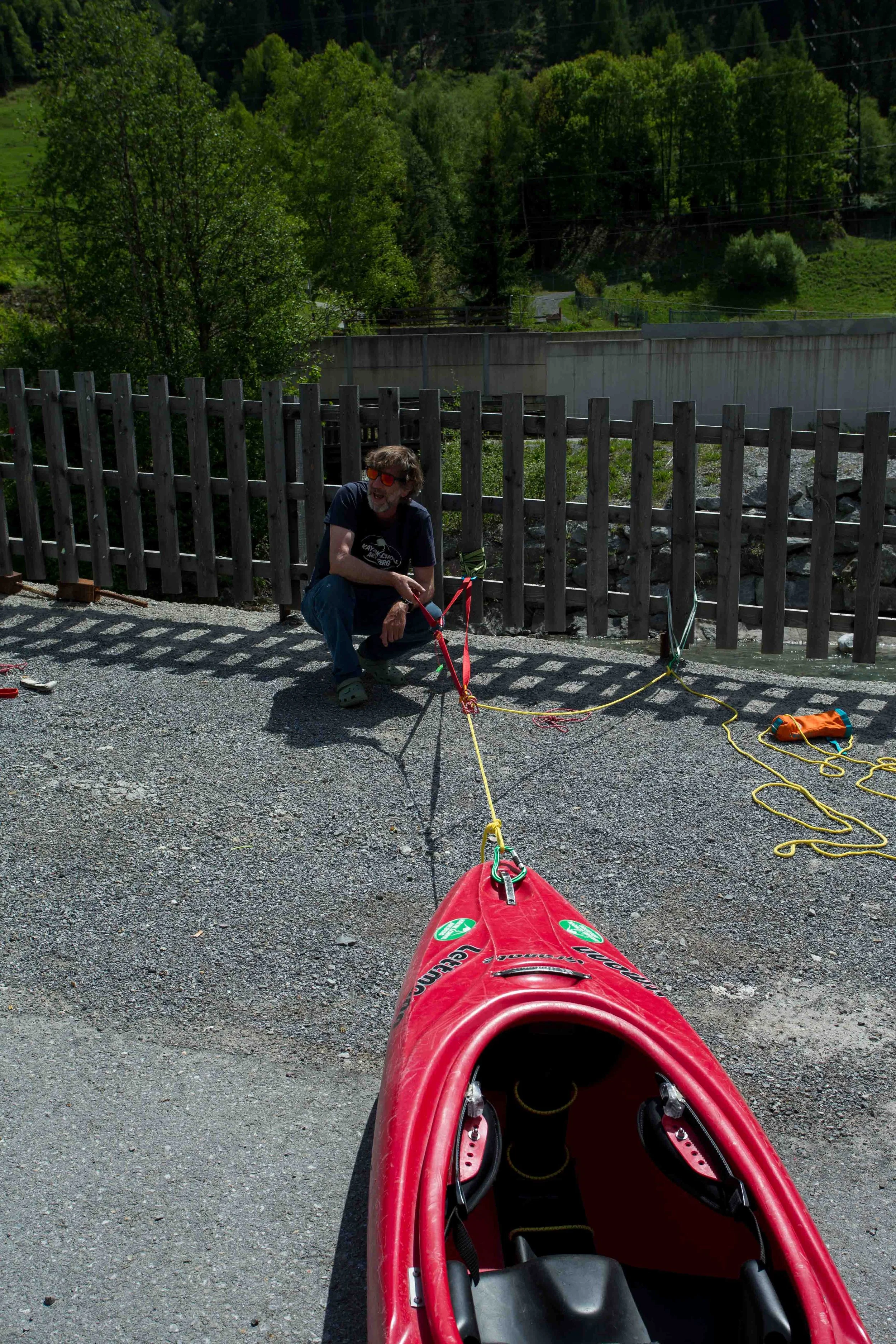
Understanding and learning the different ways we can extract a kayak stuck in a river. We go through the simple methods first, then moving up with mechanical advantages.
Pull and Vector
Pulling a stuck kayak with a straight pull adding extra kayakers to increase the force applied. Experimenting pulling from different directions to see if there is any movement in the stuck kayak.
Use a vector pull to change the load direction on the main line to see whether the stuck kayak starts to move.
Mechanical Advantages
We look at the various mechanical advantages available to us with the equipment we are carrying on the river. We spend time working on the 4:1 pig rig mechanical system.
Scenarios
We spend a lot of the second afternoon working on scenarios. With great locations on the River Rosanna and River Sanna we can provide some fantastic situations that each team member will have to work with.
Such as:
Rising river levels
A kayaker stuck on a rock separated with their equipment
Equipment and kayaker on different sides of the river
Shoulder dislocation requiring assistance.
Lost kayak or paddle
Chase boating and group separation
An entrapped kayaker in a stopper or with a foot entrapment
A pinned kayak and paddle
With our experience gained throughout the world over the decades we can come up with some fantastic scenarios that will put your skills and knowledge to the test!
Reflections and skills checklist
Finally after the second day we sit down and discuss key learning points such as what worked well? What was difficult and what solutions did we come up with to solve each problem.
Going through the scenarios to see what worked well and what could be improved on before finally going through the 2 days and clearing up any questions or queries over the White Water Safety Course with us here at Kayak School Arlberg in Austria.